
COURSES / TECHNICAL COURSES
AI Intermediate Course Beginner-Friendly Professional Course for College Students & Professionals
Back to Courses Enroll the courseIntroduction to Artificial Intelligence: Course Syllabus
Course Level: Beginner – No prior programming required Typical Duration: 12 Sessions
Course Overview
This foundational programme provides a comprehensive exploration of Artificial Intelligence (AI), synthesising theoretical principles with practical application. Students will examine the definition, mechanics, and everyday utility of AI systems while developing the critical thinking skills necessary to navigate ethical complexities and societal impacts. The curriculum balances technical understanding with hands-on modelling to ensure a holistic grasp of how AI learns from data to generate predictions and decisions.
Learning Objectives
By the end of this course, students will be able to:
Define Artificial Intelligence and distinguish it from Machine Learning and Deep Learning.
Explicate fundamental machine learning concepts and underlying algorithms.
Recognise and evaluate AI applications within daily life and various industry sectors.
Identify ethical concerns, privacy risks, and inherent biases within AI systems.
Construct a functional AI model to resolve a real-world problem using industry-standard tools.
Critically evaluate the broader societal impact and future trajectories of AI technologies.
Module Breakdown
Module 1: Introduction to AI (Definition, Perception, Learning, Decision-making, Problem-solving, Natural Language Understanding, Historical Context: 1956 Dartmouth Project, AI Winter, Expert Systems, AI vs ML vs DL).
Module 2: AI in Everyday Life (Navigation and Maps, Streaming Services, Voice Assistants, Social Media, Healthcare Diagnostics, Financial Fraud Detection, E-Commerce, Privacy, Bias, Transparency, and Job Displacement).
Module 3: How AI Thinks (The AI Pipeline: Data Collection, Pattern Recognition, Training Phase, Predictions, Structured and Unstructured Data, Data Quality, Classification, and Regression).
Module 4: Types of Learning (Supervised Learning, Unsupervised Learning, Reinforcement Learning, Linear Regression, K-Means Clustering, and Q-Learning).
Module 5: Machine Learning Basics (Traditional vs ML Programming, Spam Detection, Image Recognition, Smart Recommendations, and the ML Workflow: Problem Definition to Deployment).
Module 6: Understanding Data and Bias (Structured and Unstructured Data, Categorical and Numerical Data, Data Quality, Training Data Bias, Algorithmic Bias, Measurement Bias, and Fairness Frameworks).
Module 7: Neural Networks Explained (Biological Inspiration, Neurons/Nodes, Architecture: Input, Hidden, and Output Layers, Forward Pass, Backpropagation, Activation Functions: ReLU, Sigmoid, Tanh, and Softmax).
Module 8: AI in Language (Natural Language Processing, Tokenisation, Named Entity Recognition, Sentiment Analysis, Machine Translation, Word Embeddings, and Prompt Engineering Techniques).
Module 9: Ethics in AI (Privacy Risks, Differential Privacy, Job Displacement Strategies, Transparency/Explainability, Autonomous Accountability, and Utilitarian vs Deontological Frameworks).
Module 10: Constructing Your First AI Project (Project Workflow, Foundational Project Archetypes: Iris Classification, Sentiment Analysis, House Price Prediction, Essential Python Libraries: Pandas, NumPy, Scikit-learn, Matplotlib, TensorFlow/Keras).
Module 11: Course Wrap-Up & Next Steps (Comprehensive Review, Final Project Finalisation, Advanced ML Pathways, MLOps, and Career Development Strategies).
Final Project & Resources
Final Project Guidelines Students are required to resolve a real-world problem by constructing a working AI model. The project must demonstrate a complete workflow, including problem definition, data preparation, algorithm selection, and performance evaluation. Final assessment is based on code quality, the depth of documentation (README), and the effectiveness of the final presentation or demonstration.
Support Services
Office Hours: Available for conceptual clarification, project guidance, and career advice.
Academic Support: Assistance provided by the Writing Centre for documentation help and study skills.
IT Support: Technical assistance for software environments, coding platforms, and accessibility services.
Introduction Lesson
View DetailsBasics of HTML
View DetailsGetting Know about HTML
View DetailsTags and Attributes
View DetailsBasics of CSS
View DetailsGetting Familiar with CSS
View DetailsIntroduction to Bootstrap
View DetailsResponsive Design
View DetailsCanvas in HTML 5
View Details
Lorem ipsum dolor sit amet, consectetur adipisicing elit. Cum ut sed, dolorum asperiores perspiciatis provident, odit maxime doloremque aliquam.

Lorem ipsum dolor sit amet, consectetur adipisicing elit. Cum ut sed, dolorum asperiores perspiciatis provident, odit maxime doloremque aliquam.

Lorem ipsum dolor sit amet, consectetur adipisicing elit. Cum ut sed, dolorum asperiores perspiciatis provident, odit maxime doloremque aliquam.

Way2Pro offers expert career counselling and professional guidance for students to help them choose the right academic and career path.
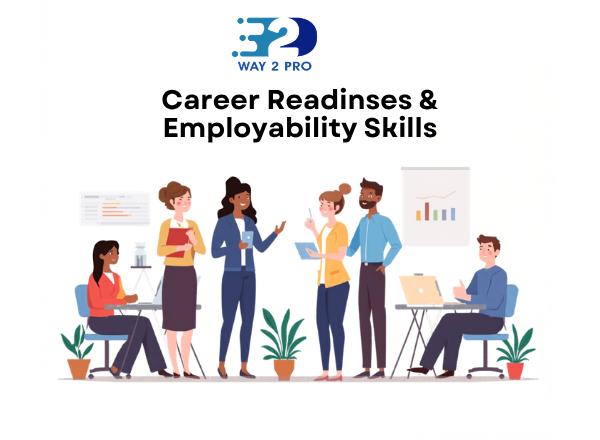
Career Readiness and Employability Skills
Communication Skills Development

Digital and Workplace Productivity Skills

Foundation & Self-Development
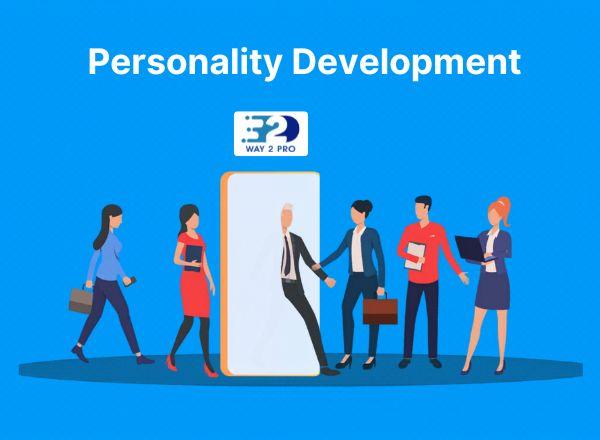
Personality Development & Corporate Grooming
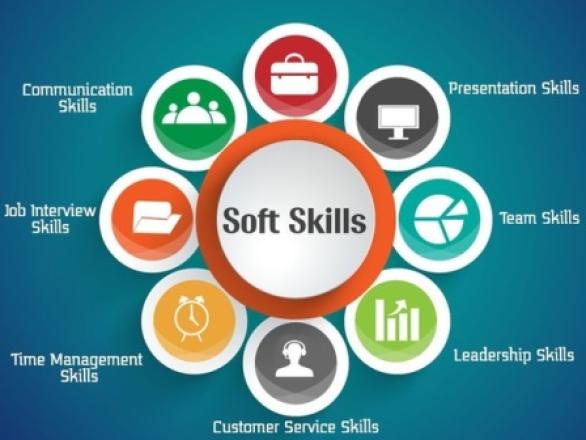
The Professional Skill Development Program by Way2Pro is designed to prepare students, fresh graduates, and early-career professionals for corporate and industry environments. The curriculum combines communication skills, personality development, digital skills, workplace readiness, and career preparation.
Teamwork, Problem Solving & Critical Thinking
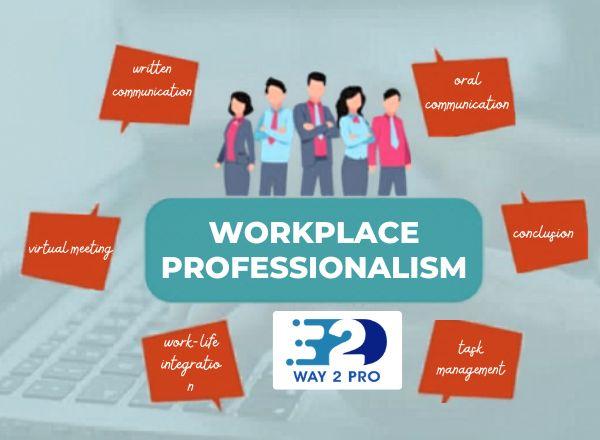
Workplace Professionalism & Corporate Exposure
Artificial Intelligence for Beginners A Practical 6–8 Week Course Guide
AI Intermediate Course Beginner-Friendly Professional Course for College Students & Professionals
Generative AI Topics - Introduction to Generative AI, Fundamentals of Machine Learning, Deep Learning Basics, Introduction to Neural Networks, Generative Models: Overview, Autoencoders and Variational Autoencoders (VAEs), Generative Adversarial Networks (GANs), Transformers and Language Models, Fine-tuning Pre-trained Models, Project and Application Development
Python Topics - Introduction to Python, Basic Operations and Control Flow, Loops, Functions, Data Structures - Lists, Data Structures - Tuples and Sets, Data Structures - Dictionaries, File Handling, Error and Exception Handling, Modules and Packages Comprehensions, Object-Oriented Programming (OOP) Basics, Advanced OOP Concepts, Working with Libraries, Final Project
Introduction to Python, Control Flow and Functions, Data Structures, File Handling, Modules and Packages, Error Handling, Introduction to Numpy, Data Analysis with Pandas, Data Visualization with Matplotlib, Data Visualization with Seaborn, Exploratory Data Analysis (EDA), Introduction to Machine Learning, Supervised Learning, Unsupervised Learning.
Electrical Engineers who want to be Trained by Highly Experienced Industry Experts are welcome to this Program.
Mechanical Engineers who want to be Trained by Highly Experienced Industry Experts are welcome to this Program.

Food Technology Industry Oriented Professional Certification Training for Diploma / B.Tech / M.Tech / B.Sc / M.Sc Students in Food Technology & Home Science
Emilly Blunt
Lorem ipsum dolor sit amet, consectetur adipisicing elit. Cum ut sed, dolorum asperiores perspiciatis provident, odit maxime doloremque aliquam.